Is a previous inspection automatically sufficient?
No. Ask a qualified assessor to compare its purpose, locations and material findings with the current work. A report should be used within the scope it actually addresses.
 GeorgetownAsbestos Removal
Georgetown Asbestos Removal helps you plan asbestos removal in Florence, Texas, with guidance on ceiling and floor materials, insulation, exterior products and commercial abatement. Start with the work your property needs and the decisions that will shape its scope.
Our Florence page brings the broad options together with local planning context. The aim is a useful brief for the professionals assessing the property: what changes, what stays, who uses the space and what must be resolved before the next stage begins.
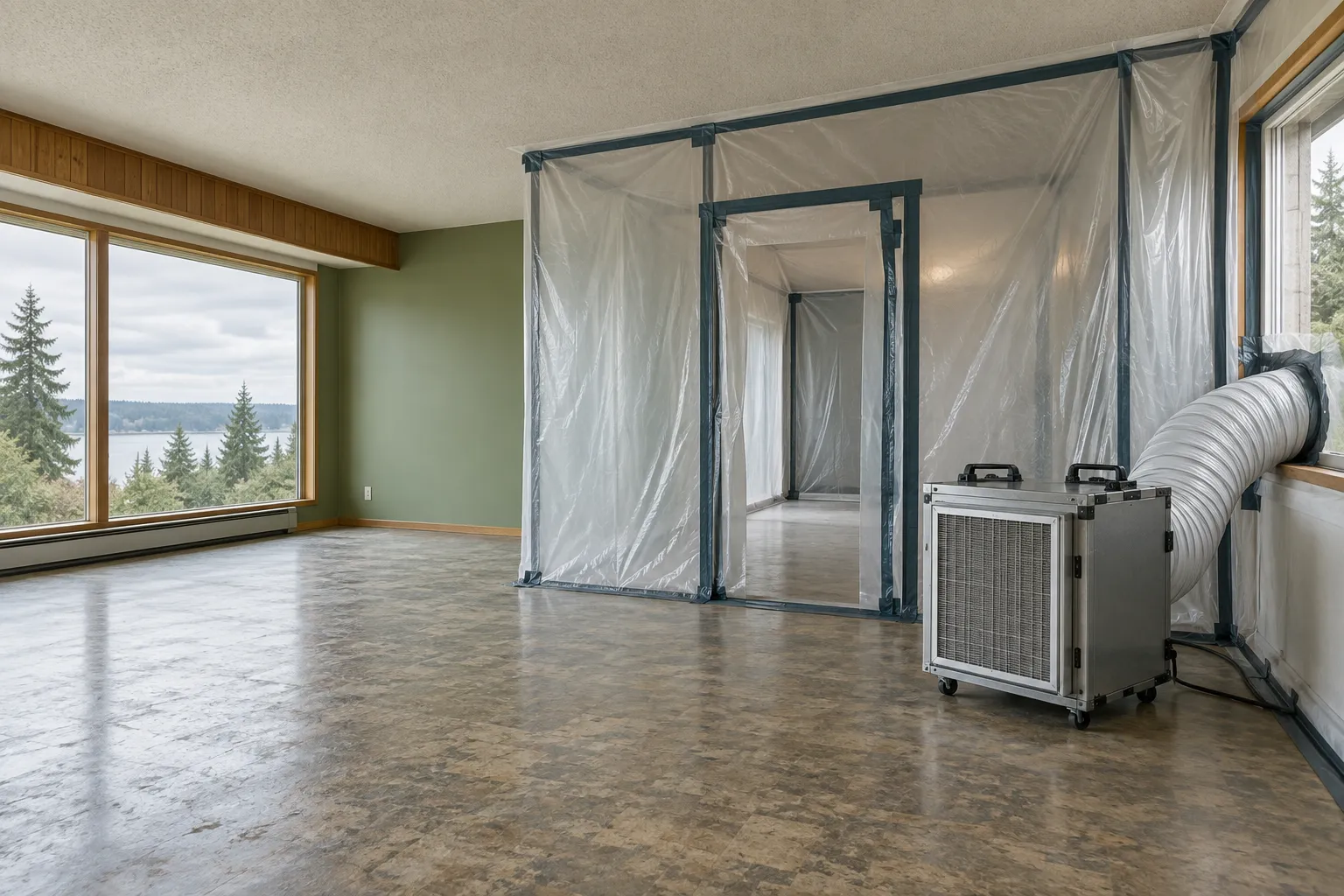
A ceiling update should start with the coating and any layers the work will disturb. Painted texture, patching compounds and earlier repairs can complicate the scope. Use the survey to define the removal area, then arrange for the ceiling repairs and new finish separately; abatement does not automatically include a paint-ready surface. The familiar stippled appearance does not establish what a coating contains. Ask the inspector to assess the materials within the proposed disturbance, including any separate texture or repair areas. Once results are available, the abatement scope can identify the exact ceilings and surfaces involved instead of treating every room as one identical material.
Floor tile, sheet-flooring backing and adhesive can be separate materials in the same room. Identify which layers are affected before choosing a removal scope. Discuss the remaining subfloor and the requirements of the replacement flooring so the handover is clear, including who handles repairs and preparation after abatement. Tile dimensions and color cannot establish asbestos content. Provide the inspector with the rooms to be changed and any known history of overlays or repairs. The removal plan should identify the surveyed tile areas and the substrate to remain, rather than assuming that all similar-looking flooring has the same composition.
Insulation around heating pipes and boilers presents a different project from loose attic material. Identify the location, condition and proposed disturbance before choosing the scope. Keep suspect material undisturbed and let the assessment establish what needs specialist handling, including access, mechanical shutdowns and the insulation that will replace it. Straight pipe runs, elbows and fittings can contain different insulation materials. A useful scope identifies where work begins and ends, the associated mechanical system and any areas that will remain in place. Discuss access and system isolation before scheduling, especially where another trade will replace or repair the pipework.
Cement siding, roof products and related exterior materials need assessment before replacement or demolition. The plan should cover access, material handling and the weather protection needed after removal. Keep the abatement scope connected to the siding or roofing project, especially where openings or previously covered layers will be exposed. A cement-like appearance cannot confirm whether siding contains asbestos. Have the material assessed before cutting openings or starting replacement. Discuss the elevations involved, any concealed layers and whether windows, trim or adjacent structures change the removal boundary. Plan what will protect the wall after the material is taken away.
A renovation survey must match the work area; a demolition project needs the building-wide scope assessed. Share plans before destructive work begins, then connect material findings, notifications where applicable and the removal sequence. Clarify the point at which the demolition or remodeling contractor can take over. Show the assessor the surfaces, openings and layers your remodel will affect. A room update may leave most finishes intact while disturbing a small but important material area. The survey should follow those planned changes, and the removal scope should distinguish the affected work from material being retained undisturbed.
A tenant improvement, shared building or commercial demolition brings occupancy and coordination into the asbestos scope. Identify affected suites, shared air systems and access routes, then align the survey and work sequence with the building’s use. Confirm the records and release arrangements the owner, occupants and following trades will need. A suite remodel can affect ceilings, flooring and partitions while adjoining tenants remain in place. Give the assessor the full proposed scope, not just the lease outline. Identify shared corridors, air systems and delivery access so the abatement plan addresses the interfaces that a room-only material list may miss. For a Florence business renovation, distinguish the asbestos material scope from the city’s commercial-building and trade-permit categories. Explain current and future building use to the assessor before deciding the applicable Texas project arrangements.
Florence’s published permit schedule separates residential and commercial building work, trade permits and demolition. For a renovation involving suspect materials, identify the actual building use and the work that follows removal. The local permit categories and Texas asbestos requirements address different parts of the project; neither should be treated as a substitute for the other.
If removal accompanies electrical, plumbing or mechanical changes, list those tasks in the initial brief and ask the city which current applications apply. A house and an associated outbuilding should be described separately if both are affected. Keep older material reports available, but have their scope checked against the proposed changes. No permit fee or deadline is quoted here because those details should come from the current city process.
Give the assessor the planned work, not only the room name. Include surfaces to be cut or removed, concealed layers likely to be encountered and any structures outside the main building. Keep earlier reports available, but ask whether their scope matches this project. An assessment of one material in one room should not become a general statement about the property. If the construction design changes, make the revised disturbance part of the discussion before work reaches it.
A useful removal scope identifies the affected materials, the work area and the interfaces with occupied spaces and other trades. Ask the contractor to explain access arrangements and any restrictions while the work takes place. Clarify who manages the applicable notices, waste arrangements and repairs afterward. These responsibilities should be understandable before the schedule is set, especially where several contractors are working under separate agreements.
Ask what records will accompany the completed scope and how the space will be released to the next trade. Waste documentation, visual checks and any specified clearance testing serve different purposes. Establish what remains in the building and what the next contractor may disturb. Keep the final documents with the property records so a later renovation can start with an accurate account of this work rather than an informal recollection.
Texas DSHS distinguishes private residences, public buildings and other facilities. Describe the occupancy, use and complete renovation or demolition project before deciding what survey and notification requirements apply. A single-home assumption should not be extended to a larger project without checking.
No. Ask a qualified assessor to compare its purpose, locations and material findings with the current work. A report should be used within the scope it actually addresses.
No. Appearance cannot confirm asbestos content. EPA recommends a qualified professional assess and sample suspect material when it is damaged or a renovation will disturb it; a qualified laboratory analyzes the sample.
Not necessarily. Condition and planned disturbance matter. Ask a qualified professional whether the material can remain undisturbed or whether another response is appropriate for the project.
Only if those tasks are included in the agreed scope. Clarify who repairs the remaining surface and installs the replacement finish before the project starts.
Gather the project address, available plans or reports and a short description of the work. Send your project details using the form below.
Phone coming soon